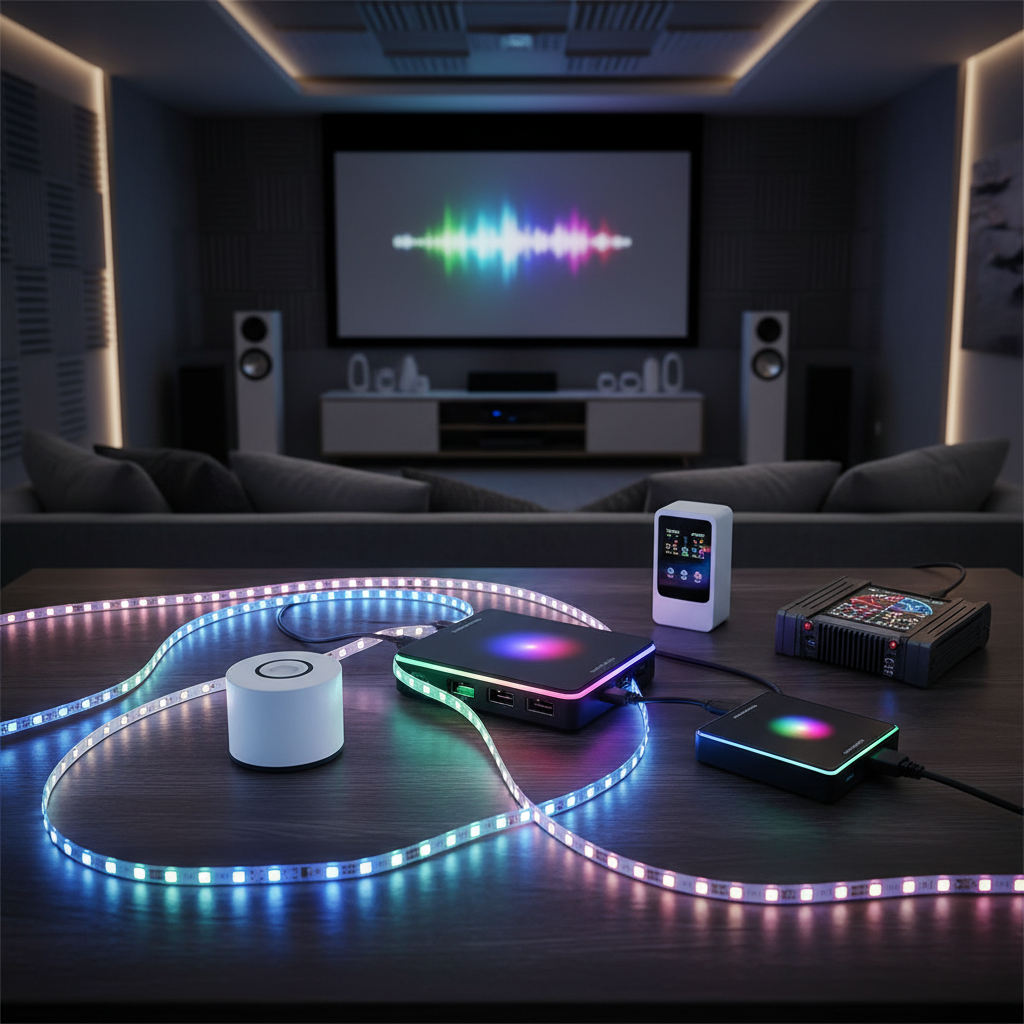
The dynamic interplay of light and sound has the power to transform any space, from a cozy living room to an electrifying party venue. LED strip lights have emerged as a versatile tool for creating stunning visual effects, and when paired with a sound reactive controller, they dance in perfect harmony with your music, truly bringing your environment to life. This guide will delve into the world of sound reactive LED controllers, helping you understand their technology, explore the top options for 2026, and make an informed choice for your needs and budget.
LED Strip Light: Overview and Applications
LED strip lights, often referred to as LED tape or ribbon lights, consist of numerous light-emitting diodes mounted on a flexible circuit board. These strips are celebrated for their incredible versatility, slim profile, and energy efficiency, making them a popular choice for accent lighting, task lighting, and decorative purposes. Their flexibility allows them to conform to various shapes and surfaces, opening up a world of creative possibilities. From illuminating kitchen cabinets and backlighting TVs to enhancing architectural features and creating immersive gaming setups, LED strip lights are a cornerstone of modern lighting design.
Understanding Sound Reactive LED Controllers
A sound reactive LED controller is the brain behind your rhythmic light show. Its core function is to analyze incoming audio signals and translate them into dynamic lighting patterns.
How They Work:
At its heart, a sound reactive controller typically utilizes a microphone (either built-in or external) to pick up ambient sound. This analog sound wave is then converted into a digital signal by an Analog-to-Digital Converter (ADC). A microcontroller processes this digital audio, often performing a Fast Fourier Transform (FFT) to break the sound into different frequency bands (like bass, mids, and treble). Based on predefined algorithms, the controller then sends signals to the LED strip, dictating changes in color, brightness, speed, and pattern to synchronize with the music. For traditional, non-addressable RGB strips, this usually involves Pulse-Width Modulation (PWM) to control the intensity of each color channel. For addressable LED strips, each LED can be controlled individually, allowing for much more complex and fluid effects.
Key Components:
The primary components include:
- Microphone: Captures sound. Digital I2S microphones (like INMP441) are generally preferred over older analog ones (like MAX4466) for superior audio quality and reduced noise interference.
- Microcontroller: Processes the audio data and controls the LEDs. ESP32 boards are a popular choice for open-source solutions like WLED due to their Wi-Fi/Bluetooth capabilities and processing power.
- LED Strip: The output display, either addressable (e.g., WS2812B, NeoPixel) for individual pixel control or non-addressable (e.g., standard RGB) for strip-wide color changes.
- Power Supply: Provides the necessary voltage and current for both the controller and the LED strip.
Key Features of Modern Sound Reactive LED Controllers in 2026
As technology advances, sound reactive LED controllers are becoming more sophisticated, offering unparalleled customization and performance. In 2026, the best controllers will boast a range of advanced features:
- Advanced Sound Reactivity Algorithms: Expect highly responsive and intelligent algorithms that can accurately differentiate between various sound frequencies, creating more nuanced and captivating light shows. This includes spectrum analysis that precisely maps audio frequencies to different LED behaviors.
- Extensive Customization:
- Dynamic Effects & Color Palettes: Controllers come pre-loaded with dozens, if not hundreds, of captivating effects (e.g., WLED offers over 30 sound-reactive effects) and vast color palettes (over 70 in WLED) that can be easily selected and tweaked.
- Sensitivity & Gain Control: Users can fine-tune the controller’s response to sound, adjusting sensitivity (how easily lights react) and gain (the intensity of the reaction) to match different audio sources and environments.
- Full Color Control: Support for RGB, RGBW, and RGB+CCT (Color Correlated Temperature) ensures a full spectrum of colors and tunable white light options.
- Segment Control: For addressable LED strips, the ability to divide the strip into multiple segments and assign different effects or colors to each section significantly enhances creative control.
- Seamless Connectivity:
- Wi-Fi & Bluetooth App Control: Modern controllers offer intuitive mobile applications for iOS and Android, allowing wireless control over effects, colors, brightness, and sensitivity.
- Smart Home Integration: Compatibility with platforms like Amazon Alexa, Google Assistant, and Home Assistant is becoming standard, enabling voice control and automation.
- RF/IR Remote Control: For quick adjustments, physical remotes remain a convenient option.
- Broad Compatibility: The best controllers support a wide range of LED strip types, including both 12V and 24V constant voltage strips, and various addressable LED protocols.
- User-Friendly Interfaces: Whether through a mobile app or a web-based interface, ease of setup and operation is a priority, making advanced features accessible to all users.
Types of Sound Reactive LED Controllers
The market offers a diverse range of sound reactive LED controllers, catering to different technical skill levels and desired functionalities.
- Integrated Plug-and-Play Controllers: These are standalone units designed for simplicity. They typically include a built-in microphone, pre-programmed effects, and often come with a remote control or companion mobile app. They are ideal for users seeking an easy, out-of-the-box solution without complex setup.
- DIY/Open-Source Solutions (e.g., WLED): For enthusiasts and those seeking maximum customization, open-source firmware like WLED, often running on microcontrollers like the ESP32, offers unparalleled flexibility. These solutions require some assembly (connecting the microcontroller, microphone, and LED strip) and flashing firmware, but they provide access to a vast array of effects, advanced configuration, and a strong community.
- Addressable vs. Non-Addressable Controllers:
- Non-Addressable Controllers: These control the entire LED strip as a single unit, meaning all LEDs display the same color or effect simultaneously. They are simpler and generally more affordable.
- Addressable Controllers: Designed for “smart” LED strips (like WS2812B), these controllers can individually control each LED or small groups of LEDs. This allows for complex animations, chasing effects, pixel-mapping, and highly dynamic, intricate light shows that are perfectly synchronized with sound frequencies.
Buying Guide: Choosing the Right Sound Reactive LED Controller
Selecting the ideal sound reactive LED controller involves considering several factors to ensure it aligns with your specific needs and expectations.
- Determine Your Use Case: What is the primary purpose? For a subtle ambient effect in a bedroom, a simple plug-and-play controller might suffice. For an immersive gaming setup or a vibrant party atmosphere, a highly customizable addressable controller with advanced features is likely more suitable.
- Controller Type – DIY vs. Commercial:
- Commercial (Plug-and-Play): Choose if you prioritize ease of installation, ready-to-use effects, and a straightforward user experience.
- DIY (e.g., WLED on ESP32): Opt for this if you enjoy tinkering, desire extensive customization, want access to a vast library of effects, and appreciate community support.
- LED Strip Compatibility:
- Addressable or Non-Addressable: This is crucial. If you already have LED strips, ensure the controller is compatible. If buying new, decide whether you want the advanced per-pixel effects of addressable strips or the simplicity of non-addressable ones.
- Voltage: Confirm the controller supports your LED strip’s voltage (most commonly 12V or 24V).
- Connectivity and Control Options: Do you prefer a physical remote, a mobile app, or integration with your smart home system? Many modern controllers offer multiple options.
- Microphone Quality and Input: A high-quality internal microphone is good for general ambient sound. For more precise audio reactivity, consider controllers with external line-in audio inputs or those supporting advanced digital microphones (I2S).
- Power Supply: Always ensure your power supply has enough wattage and current to safely power both the controller and the entire length of your LED strip at maximum brightness. Undersized power supplies can lead to dimming or flicker.
- Budget: Sound reactive controllers vary widely in price. Integrated commercial units can range from affordable to premium, while DIY solutions like WLED can be very cost-effective if you’re willing to assemble them.
Bảng So Sánh Các Loại Đèn LED Strip Light Phổ Biến
To help you visualize the differences, here’s a comparative overview of common sound reactive LED controller types:
| Controller Type | Primary Advantage | Control Method | LED Compatibility | Customization | Typical Use Case |
|---|---|---|---|---|---|
| Basic Commercial | Ease of Use, Plug-and-Play | Remote, Simple App | Non-Addressable RGB | Limited Presets | Ambient lighting, simple parties |
| Advanced Commercial | Robust Features, Reliability | Advanced App, Smart Home | Addressable & Non-Addressable | Moderate Presets & Tweaks | Gaming rooms, home theaters, larger events |
| DIY/WLED (ESP32) | Max Customization, Open Source | Wi-Fi App, Web UI, Smart Home | Addressable & Non-Addressable | Extensive Effects, Deep Settings | Enthusiasts, custom installations, developers |
Top Sound Reactive LED Controller Solutions for 2026
While specific models evolve rapidly, certain approaches and brands stand out for their innovation and performance in 2026.
- WLED-based Controllers: For many, the open-source WLED firmware, running on an ESP32 development board, remains the gold standard. Its recent updates (version 0.15.0 onwards now includes the sound reactive usermod officially) ensure robust performance. When paired with a quality I2S digital microphone (e.g., INMP441) and addressable LED strips like WS2812B, WLED offers an unparalleled range of effects (over 30 sound-reactive options), deep customization through its intuitive web and mobile app interfaces, and active community support. Many third-party hardware manufacturers are also offering pre-assembled ESP32-based controllers specifically designed for WLED-SR, making the DIY entry point more accessible.
- Commercial Plug-and-Play Systems: Brands like LED City USA and Hyperspace Lighting Company offer ready-to-use sound reactive controllers. These often feature built-in microphones, a variety of preset color modes and sound-activated patterns, and control via a dedicated remote or smartphone app. They are excellent choices for users who want a straightforward installation and reliable performance without delving into technical specifics. Look for models supporting both 12V and 24V constant voltage strips and offering robust app control via Bluetooth or Wi-Fi.
“The true magic of sound reactive lighting isn’t just about flashing lights; it’s about creating an emotional connection between the auditory and visual experience. The best controllers achieve this by offering both sophisticated audio analysis and highly customizable visual outputs.” – Alex Chen, LED Lighting Engineer
Installation and Maintenance Tips
Proper installation and maintenance are key to maximizing the lifespan and performance of your sound reactive LED setup.
Installation Steps:
- Planning: Map out your LED strip layout and measure the required length.
- Power Supply: Connect your appropriate power supply to the controller. Ensure the power supply matches the voltage of your LED strip and provides sufficient current (amps) for the entire strip.
- Controller to LED Strip:
- For non-addressable RGB strips, connect the R, G, B, and V+ wires from the controller to the corresponding inputs on the strip.
- For addressable strips, connect the Data, GND, and V+ wires. A current-limiting resistor (e.g., 330 Ohm) on the data line, placed close to the LED strip, is often recommended to protect the first LED pixel.
- Microphone Connection: If using an external microphone, connect its output to the designated audio input pin on the controller (e.g., GPIO35 on an ESP32 for WLED setups).
- Secure Mounting: Use the adhesive backing on LED strips or mounting clips to secure them in place. Ensure the controller is in a well-ventilated area, away from moisture.
- Software Setup (for DIY/Smart Controllers): For WLED, flash the sound-reactive firmware to your ESP32 board, configure Wi-Fi settings, and adjust LED preferences via the web UI or mobile app.
Safety Precautions:
- Always disconnect power before making any connections.
- Ensure all connections are secure to prevent shorts.
- Match the voltage of your LED strip and controller with the power supply.
- Do not exceed the maximum current rating of your controller or power supply.
Maintenance for Longevity:
- Keep Clean: Regularly clean your LED strips and controller to prevent dust buildup, which can cause overheating.
- Firmware Updates: For smart controllers like WLED, regularly check for and apply firmware updates to benefit from new features, bug fixes, and performance improvements.
- Environmental Protection: If installed outdoors, ensure all components are rated for outdoor use and properly sealed against moisture and elements.
Conclusion
Sound reactive LED controllers have evolved significantly, transforming passive lighting into an interactive and captivating experience. Whether you opt for a user-friendly commercial unit or embrace the deep customization of an open-source solution like WLED on an ESP32, the ability to synchronize light with sound creates an immersive atmosphere unlike any other. By understanding the core technology, key features, and various types available, you can confidently choose the best controller to unleash the full potential of your LED strip lighting in 2026 and beyond.
What kind of atmosphere are you looking to create with your next lighting project?
Câu Hỏi Thường Gặp
What is the difference between an addressable and a non-addressable LED strip for sound reactivity?
|
Our Picks for the Best LED strip light in 2026
As an Amazon Associate I earn from qualifying purchases.
|
||
| Num | Product | Action |
|---|---|---|
| 1 | Barrina (6 Pack LED T5 Integrated Single Fixture, 4FT, 2200lm, 6500K Super Bright White, 20W Utility LED Shop Light, Ceiling and Under Cabinet Light, Corded Electric with ON/Off Switch, ETL Listed |

|
| 2 | DAYBETTER LED Strip Lights 110ft, Smart Lighting Strips with App Remote Control, RGB Music Sync Color Changing Lights for Bedroom Kitchen Party Home Decor Luces led para cuarto (1 Roll) |
|
| 3 | White Led Strip Lights for Bedroom Small Dimmable LED Lights Strip 16.4ft Super Bright Flexible LED Tape Lights Rope Light for for Room Home Decor Luces Leds for Living Room Kitchen Vanity Mirror |
|
| 4 | KSIPZE 100ft Led Strip Lights RGB Music Sync Color Changing Led Lights with Smart App Control Remote Led Lights for Bedroom Room Lighting Flexible Home Décor |
|
| 5 | Govee RGBIC LED Strip Lights, Smart LED Lights for Bedroom, Bluetooth LED Lights APP Control, DIY Multiple Colors on One Line, Color Changing LED Strip Lighting Music Sync, Home Decor, 16.4ft |
|
| 6 | Govee 100ft RGBIC LED Strip Lights, Smart LED Lights Work with Alexa and Google Assistant, LED Lights for Bedroom WiFi App Control Segmented DIY Multiple Colors, Color Changing Light, (2 x 50ft) |
|
| 7 | NBBUFF Led Lights for Bedroom 50ft (1 Roll), Color Changing RGB Led Strip Lights with 60 Keys Remote and App Control, Music Sync Led Lights for Room Kitchen Party Home Decor |
|
| 8 | dalattin White LED Strip Lights, 20ft Dimmable Super Bright 24V Led Tape Light 6500K 360 LEDs Lights for Bedrooms, Mirror, Kitchen, Home Decoration Daylight White |
|
| 9 | DAYBETTER Led Strip Lights 32.8ft Kit with Remote and Power Supply Color Changing |
|
| 10 | Govee White LED Strip Lights, Upgraded 16.4ft Dimmable LED Light Strip 6500K Bright Daylight White, Strong Adhesive, 300 LEDs Flexible Tape Lights for Mirror, Kitchen Cabinet, Bedroom, Christmas Decor |
|
An addressable LED strip allows individual control over each LED, enabling complex, pixel-by-pixel effects that can accurately chase and dance to specific sound frequencies. Non-addressable strips, conversely, illuminate uniformly, meaning the entire strip changes color or brightness simultaneously in response to sound, offering simpler, but still dynamic, effects.
Can I control a sound reactive LED controller with my smartphone?
Yes, most modern sound reactive LED controllers, especially those released in 2026, offer smartphone app control via Wi-Fi or Bluetooth. These apps typically provide intuitive interfaces for selecting effects, adjusting colors, fine-tuning sensitivity, and even integrating with smart home ecosystems like Alexa or Google Assistant.
What hardware do I need for a DIY sound reactive LED setup with WLED?
For a DIY WLED setup, you generally need an ESP32 development board, a compatible addressable LED strip (e.g., WS2812B), an I2S digital microphone module for superior audio input, and a suitable 5V power supply. The WLED firmware, including the sound-reactive usermod, is then flashed onto the ESP32.
Are sound reactive LED controllers safe to use?
Yes, when installed correctly with appropriate power supplies and according to manufacturer guidelines, sound reactive LED controllers are safe. It’s crucial to match voltage, ensure proper wiring, and avoid overloading the system. Many controllers also incorporate safety features like short-circuit protection.