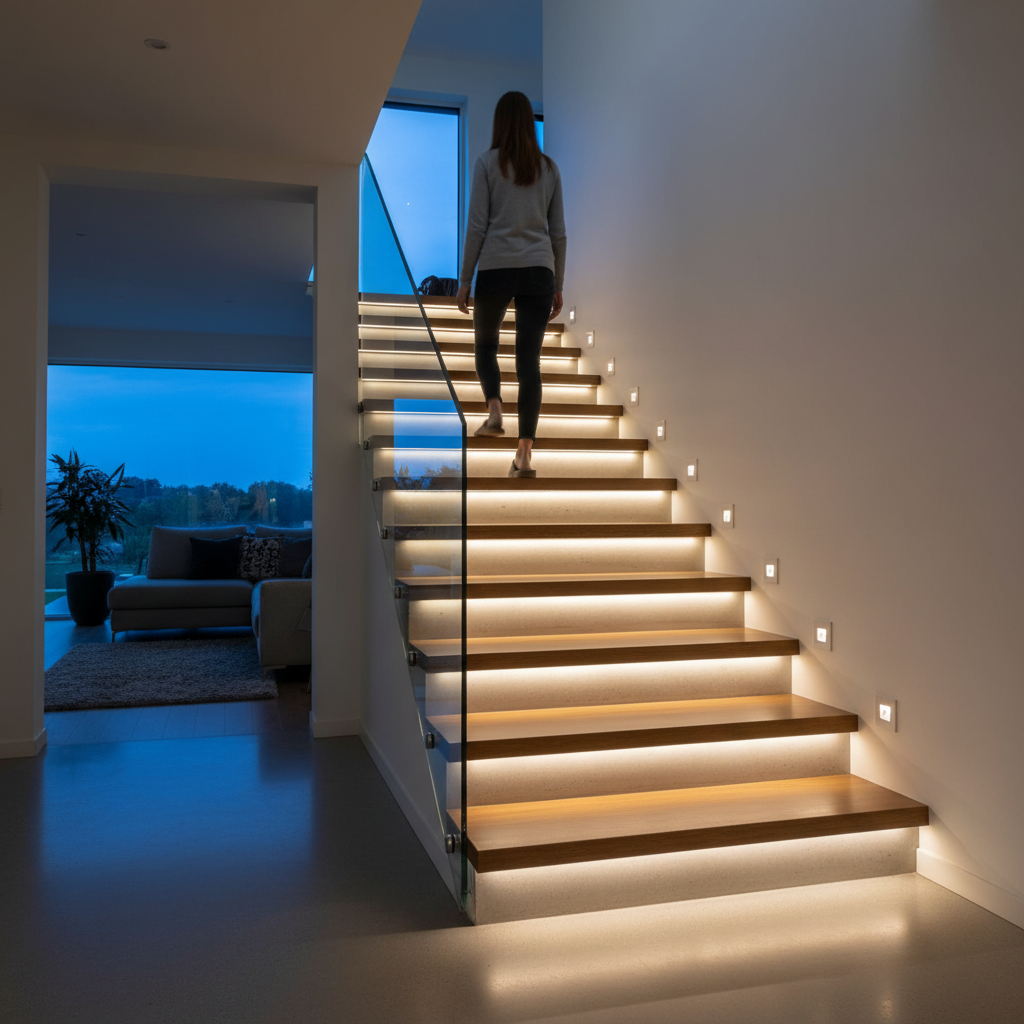
Navigating stairs in the dark can be a hazard, turning a simple transition between floors into a potential accident waiting to happen. Whether it’s a dimly lit hallway or an outdoor staircase shrouded in night, ensuring clear visibility is paramount for the safety of everyone in your home. This comprehensive guide will explore how modern LED strip lights offer a brilliant, energy-efficient, and stylish solution to enhance staircase safety, providing a secure and aesthetically pleasing ascent or descent.
LED Strip Lights for Staircases: Overview and Applications
LED strip lights are flexible circuit boards embedded with light-emitting diodes (LEDs) that provide continuous, uniform illumination. Their compact, low-profile design allows them to be discreetly installed in various locations, transforming ordinary staircases into well-lit, visually striking architectural features. Initially developed for backlighting and accentuation, these versatile lights have evolved significantly, offering improved brightness, durability, and smart control options.
Today, you’ll find various types tailored for specific needs. Key distinctions often include:
- Voltage: Most residential applications favor low-voltage options like 12V or 24V for enhanced safety. Higher voltages (110V/220V) are typically reserved for commercial or architectural projects with professional electrical protection.
- Color and Temperature: Options range from single-color white (warm, neutral, or cool) to tunable white, RGB (red, green, blue for color-changing effects), and RGBW (RGB plus white for broader color mixing and purer white light). Warm white often creates a cozy ambiance, while cool white offers crisp clarity, ideal for safety-focused illumination.
- IP Rating: The Ingress Protection (IP) rating indicates a strip’s resistance to dust and moisture. For outdoor staircases or areas exposed to humidity, an IP65 or higher rating is essential, with IP68 offering superior waterproofing for extreme conditions.
These lights are not just for aesthetics; their applications span from enhancing residential interiors and illuminating outdoor pathways to providing clear visual guidance in commercial spaces.
Unmatched Advantages of LED Strip Lights for Stair Safety
When it comes to illuminating staircases, LED strip lights stand out from traditional lighting solutions due to a multitude of benefits, with safety at the forefront.
One of the most significant advantages is their ability to provide continuous and even illumination. Unlike spotlights or wall sconces that create scattered light and shadows, LED strips cast a uniform glow across each step, eliminating dark spots that can lead to missteps and falls. This consistent light makes the edges of each tread clearly visible, a crucial factor for children, the elderly, or anyone navigating stairs in low light.
Energy efficiency and longevity are also hallmarks of LED technology. These lights consume significantly less electricity—up to 80% less than incandescent bulbs—leading to substantial savings on your utility bills. Furthermore, LED strip lights boast an impressive lifespan, often lasting 50,000 hours or more, drastically reducing the frequency and cost of replacements and maintenance.
Their flexibility and ease of installation make them highly adaptable to any staircase design, whether straight, spiral, or uniquely curved. Most strips come with adhesive backing for straightforward application, and they can be cut to specific lengths, ensuring a tailored fit. This allows for DIY installation without requiring extensive professional help in many cases.
Beyond safety, LED strips offer versatility in color and effects, allowing you to create diverse ambiances. With options for dimming and color changes, you can adjust the lighting to suit any mood or occasion, from a subtle nightlight to vibrant accent lighting.
Finally, the integration of smart features elevates their functionality. Many modern LED strip lights can be paired with motion sensors, automatically illuminating the stairs as someone approaches and turning off when no movement is detected. This hands-free operation not only enhances safety and convenience but also contributes to greater energy savings. Compatibility with smart home systems like Alexa, Google Home, and Apple Home enables voice control and seamless integration into your existing smart ecosystem.
“The primary goal of staircase lighting isn’t just to look good, but to fundamentally enhance safety by providing clear, consistent visibility, especially at night.”
Comparing Popular LED Strip Light Types for Staircases
Choosing the right LED strip light involves understanding the characteristics of various types. Here’s a comparison to help you differentiate:
| Type of LED Strip | Voltage | Key Color Options | Typical Power (per meter) | Brightness (approx. lm/m) | Unique Features | Estimated Price Range (per meter) |
|---|---|---|---|---|---|---|
| Standard SMD | 12V/24V | Single Color, RGB | 4.8W – 14.4W | 300 – 1000 | Flexible, widely available | Low to Medium |
| COB (Chip-on-Board) | 12V/24V | Single Color, Tunable White | 8W – 15W | 500 – 1200 | Dotless, smooth, uniform light | Medium to High |
| Tunable White | 12V/24V | Adjustable White (Warm to Cool) | 7.2W – 12W | 400 – 900 | Change color temperature to suit mood/time of day | Medium |
| RGBW/RGBIC | 12V/24V | Full Color Spectrum + Pure White | 9.6W – 19.2W | 600 – 1500 | Advanced color control, multiple colors on one strip (RGBIC) | Medium to High |
| Outdoor (High IP) | 12V/24V | Single Color, RGB | 7.2W – 14.4W | 400 – 1000 | Weatherproof (IP65/67/68), durable casing | Medium to High |
Note: Power, brightness, and price are approximate and can vary significantly based on LED density, chip quality, and brand.
Choosing the Best LED Strip Lights for Your Staircase (Buying Guide)
Selecting the ideal LED strip lights for your staircase involves thoughtful consideration of your specific needs and the environment.
-
Determine Your Usage Needs:
- Location: Are your stairs indoors or outdoors? Outdoor stairs require strips with a higher IP rating (IP65 or above) for water and dust resistance.
- Purpose: Is the lighting primarily for safety, ambiance, or both? For pure safety, brighter, cooler white lights might be preferred, while warmer tones create a more inviting atmosphere.
- Stair Type: Straight, spiral, or floating stairs each have unique installation requirements and optimal placement points.
-
Evaluate Key Features:
- Voltage: For residential safety, 12V or 24V low-voltage strips are highly recommended. A 24V system often allows for longer runs without significant voltage drop, ensuring consistent brightness across all steps.
- Color Temperature & Brightness: Choose a color temperature (CCT) that complements your home’s decor. For safety, ensure adequate brightness to prevent accidents without causing uncomfortable glare. Medium-to-low brightness with dimming capabilities offers the best user experience.
- IP Rating: Crucial for outdoor installations (IP65 or higher).
- Smart Features: Consider motion sensors for automatic illumination and smart home integration for convenience.
-
Check Product Quality and Brand Reputation:
- Brand: Opt for reputable brands known for quality and reliability.
- Certifications: Look for safety certifications.
- User Reviews: Read customer feedback for insights into real-world performance and durability.
-
Compare Costs:
- Balance your budget with quality and features. Remember that investing in slightly more expensive, high-quality strips often results in greater longevity and better performance.
-
Online Purchase Considerations:
- Always read product descriptions thoroughly, paying attention to specifications, warranty policies, and return procedures.
Reputable LED Strip Light Brands for Stair Lighting
When investing in LED strip lights for staircase safety, choosing a reliable brand is crucial for performance, durability, and peace of mind. Here are some of the trusted names in the market:
- Aqara: Known for its smart home ecosystem, Aqara offers LED strips like the T1, which integrate seamlessly with platforms such as Apple Home, Google Home, and Alexa. Their focus on smart features, including motion sensor compatibility and Matter compatibility, makes them an excellent choice for automated, future-proof stair lighting.
- Govee: Popular for their vibrant RGB LED strip lights, Govee products are often praised for ease of installation and operation, offering bright illumination at reasonable prices. They are a good option for those seeking dynamic color options alongside functional lighting.
- Philips Hue: As a leader in smart lighting, Philips Hue provides light strips that offer decorative and functional lighting with robust smart home integration. Their strips are known for quality light output and extensive smart control capabilities.
- SuperLightingLED: This brand specializes in intelligent motion sensor LED stair light kits, often featuring COB (Chip-on-Board) LED strips that provide a smooth, dotless light, enhancing both safety and modern aesthetics.
- Flexfire LEDs: Providing a range of professional-grade LED strip lighting solutions, Flexfire LEDs are a good source for high-quality, durable strips, especially for projects requiring specific voltage or brightness levels.
- aspectLED: Offers various LED strip lights, including dotless linear options in single color, tunable white, and RGB, with recommendations for different lighting effects and applications.
These brands often provide accompanying accessories like controllers, power supplies, and aluminum profiles, ensuring a complete and compatible lighting system.
Expert Tips for Safe and Effective LED Stair Strip Installation
Proper installation is as crucial as choosing the right LED strip lights for maximizing both safety and aesthetic appeal.
1. Planning and Preparation:
- Measure Accurately: Carefully measure the length of each step, under-tread, or railing section where you plan to install the lights. This ensures you purchase the correct length of strips and minimize waste.
- Power Supply: Determine the location for your power supply and controller. Ensure it’s easily accessible but also discreetly hidden. For low-voltage strips, you’ll need a suitable LED driver.
- Wiring Scheme: Plan your wiring carefully to avoid voltage drop, especially for longer runs. Connecting LED strips in parallel is often recommended to maintain consistent brightness.
2. Installation Steps:
- Surface Preparation: Clean the installation surface thoroughly. Dust, dirt, or moisture can compromise the adhesive backing.
- Apply Adhesive: Most LED strips come with pre-applied adhesive. Peel off the protective layer and carefully press the strip onto the desired surface. Note that this adhesive is often for one-time use, so precise placement is key.
- Use Aluminum Channels/Profiles: For a professional finish, enhanced durability, and improved light diffusion, consider installing LED strips within aluminum channels with diffusers. These profiles protect the strips from physical damage and moisture, reduce glare, and provide a more even, sophisticated light output.
- Secure Connections: Use appropriate connectors for cutting and joining strips. Ensure all electrical connections are secure and properly insulated to prevent short circuits.
3. Safety Precautions:
- Low Voltage First: Always work with low-voltage (12V/24V) LED strips for residential staircases to minimize electrical risks.
- Electrical Codes: Adhere to national and local electrical codes. If you’re unsure about wiring or power connections, it’s always best to consult a qualified electrician.
- Avoid Overloading: Do not daisy-chain LED strip lights beyond their maximum recommended run length to prevent voltage drop, which can cause inconsistent brightness and potentially shorten the lifespan of the LEDs.
- Outdoor Protection: For outdoor installations, ensure all components—strips, connectors, and power supplies—are rated for outdoor use (e.g., IP65 or higher) and protected from direct exposure to elements.
4. Maintenance and Troubleshooting:
- Regular Cleaning: Periodically clean the LED strips and diffusers to maintain optimal light output.
- Check Connections: If lights flicker or parts of the strip stop working, check all connections for looseness or damage.
- Power Supply Issues: Many issues can be traced back to a faulty or inadequate power supply. Ensure your power supply matches the voltage and total wattage requirements of your LED strips.
By following these guidelines, you can ensure a safe, durable, and visually appealing LED strip lighting installation for your staircase.
Conclusion
Embracing LED strip lights for staircase illumination is a smart decision for any homeowner prioritizing safety, style, and energy efficiency. From providing continuous, glare-free light to prevent falls, to offering vibrant aesthetic enhancements and smart automation, these versatile lights deliver on multiple fronts. With options for various voltages, colors, and IP ratings, alongside reputable brands and straightforward installation methods, transforming your staircase into a well-lit and secure pathway has never been easier. Why not consider how a strategically lit staircase could elevate both the safety and ambiance of your home?
Câu Hỏi Thường Gặp
What is the safest type of LED strip light for stairs?
|
Our Picks for the Best LED strip light in 2026
As an Amazon Associate I earn from qualifying purchases.
|
||
| Num | Product | Action |
|---|---|---|
| 1 | DAYBETTER LED Strip Lights 110ft, Smart Lighting Strips with App Remote Control, RGB Music Sync Color Changing Lights for Bedroom Kitchen Party Home Decor Luces led para cuarto (1 Roll) |

|
| 2 | KSIPZE 100ft Led Strip Lights RGB Music Sync Color Changing Led Lights with Smart App Control Remote Led Lights for Bedroom Room Lighting Flexible Home Décor |
|
| 3 | Govee 100ft RGBIC LED Strip Lights, Smart LED Lights Work with Alexa and Google Assistant, LED Lights for Bedroom WiFi App Control Segmented DIY Multiple Colors, Color Changing Light, (2 x 50ft) |
|
| 4 | White Led Strip Lights for Bedroom Small Dimmable LED Lights Strip 16.4ft Super Bright Flexible LED Tape Lights Rope Light for for Room Home Decor Luces Leds for Living Room Kitchen Vanity Mirror |
|
| 5 | Barrina (6 Pack LED T5 Integrated Single Fixture, 4FT, 2200lm, 6500K Super Bright White, 20W Utility LED Shop Light, Ceiling and Under Cabinet Light, Corded Electric with ON/Off Switch, ETL Listed |
|
| 6 | dalattin White LED Strip Lights, 20ft Dimmable Super Bright 24V Led Tape Light 6500K 360 LEDs Lights for Bedrooms, Mirror, Kitchen, Home Decoration Daylight White |
|
| 7 | Govee RGBIC LED Strip Lights, Smart LED Lights for Bedroom, Bluetooth LED Lights APP Control, DIY Multiple Colors on One Line, Color Changing LED Strip Lighting Music Sync, Home Decor, 16.4ft |
|
| 8 | DAYBETTER Led Strip Lights 32.8ft Kit with Remote and Power Supply Color Changing |
|
| 9 | NBBUFF Led Lights for Bedroom 50ft (1 Roll), Color Changing RGB Led Strip Lights with 60 Keys Remote and App Control, Music Sync Led Lights for Room Kitchen Party Home Decor |
|
| 10 | Govee White LED Strip Lights, Upgraded 16.4ft Dimmable LED Light Strip 6500K Bright Daylight White, Strong Adhesive, 300 LEDs Flexible Tape Lights for Mirror, Kitchen Cabinet, Bedroom, Christmas Decor |
|
Low-voltage (12V or 24V) LED strip lights are considered the safest for residential staircases, especially those with an appropriate IP rating for their environment. When combined with motion sensors and proper installation in aluminum channels, they significantly reduce tripping hazards and provide reliable illumination.
Where should LED strip lights be placed on stairs for optimal safety?
For optimal safety and glare reduction, LED strip lights are best placed under the bullnose (the edge of the tread) or along the underside of each step. This placement illuminates the riser and tread evenly without shining directly into the eyes.
Do LED strip lights for stairs require professional installation?
Many LED strip light kits are designed for DIY installation with adhesive backing and simple connectors. However, for complex setups involving extensive wiring, smart home integration, or outdoor applications requiring specific IP ratings, consulting a professional electrician is advisable to ensure compliance with electrical codes and maximize safety.
Can LED strip lights be used on outdoor stairs?
Yes, LED strip lights with an appropriate IP (Ingress Protection) rating, typically IP65 or higher, are suitable for outdoor stairs. These strips are designed to withstand exposure to moisture, dust, and other environmental elements, ensuring durable and safe outdoor illumination.
How do motion sensors improve staircase lighting safety?
Motion sensors enhance staircase lighting safety by automatically illuminating the stairs when movement is detected, eliminating the need to search for light switches in the dark. This provides instant visibility, prevents falls, and conserves energy by ensuring lights are only on when needed.