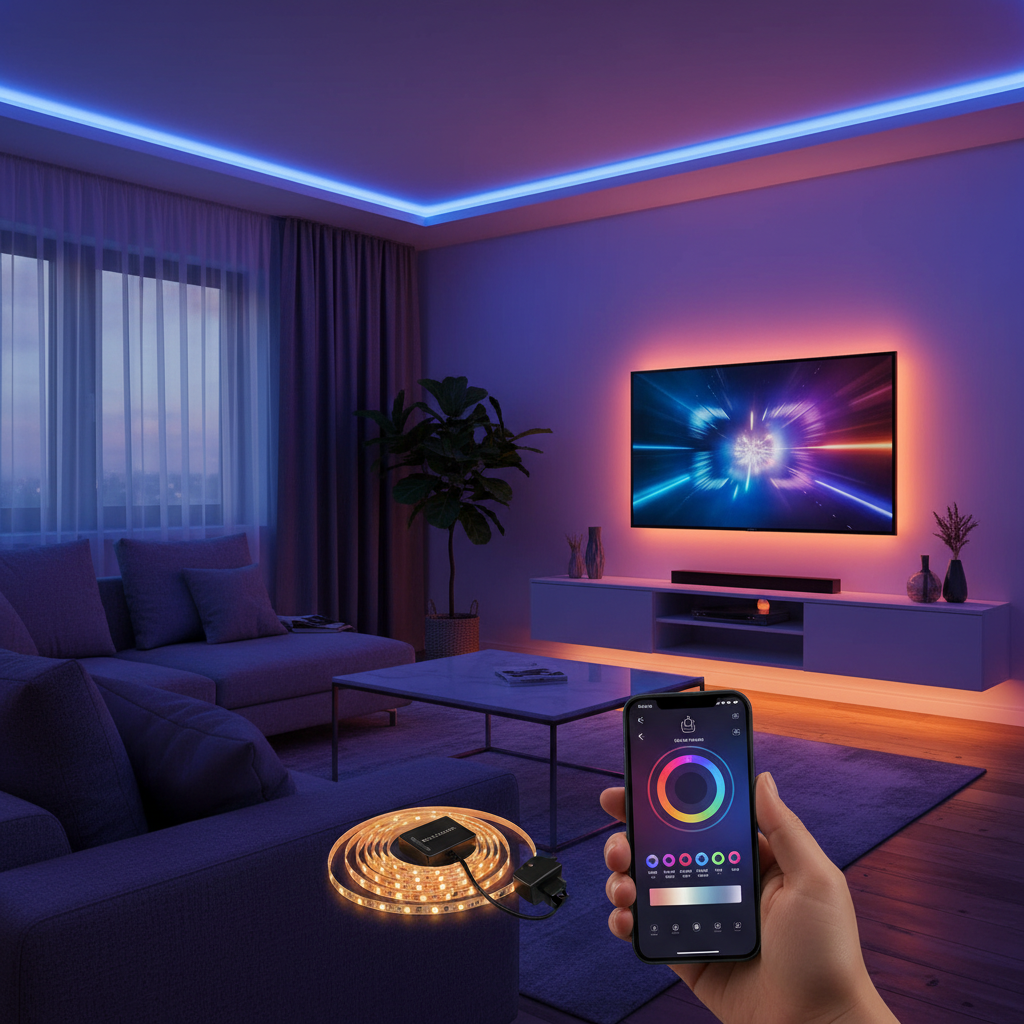
In the intricate world of photography, where every shade and hue tells a story, the quality of light is paramount. Beyond brightness, photographers relentlessly pursue light that renders colors with impeccable accuracy, transforming ordinary shots into vibrant, true-to-life masterpieces. This pursuit often leads to the critical specification known as Color Rendering Index (CRI), and for professional studios, a CRI of 95 or higher isn’t just a preference – it’s a necessity. This comprehensive guide will illuminate the path to selecting the ultimate CRI 95+ LED strip lights, ensuring your photography studio is equipped with the precise, high-fidelity illumination your art demands.
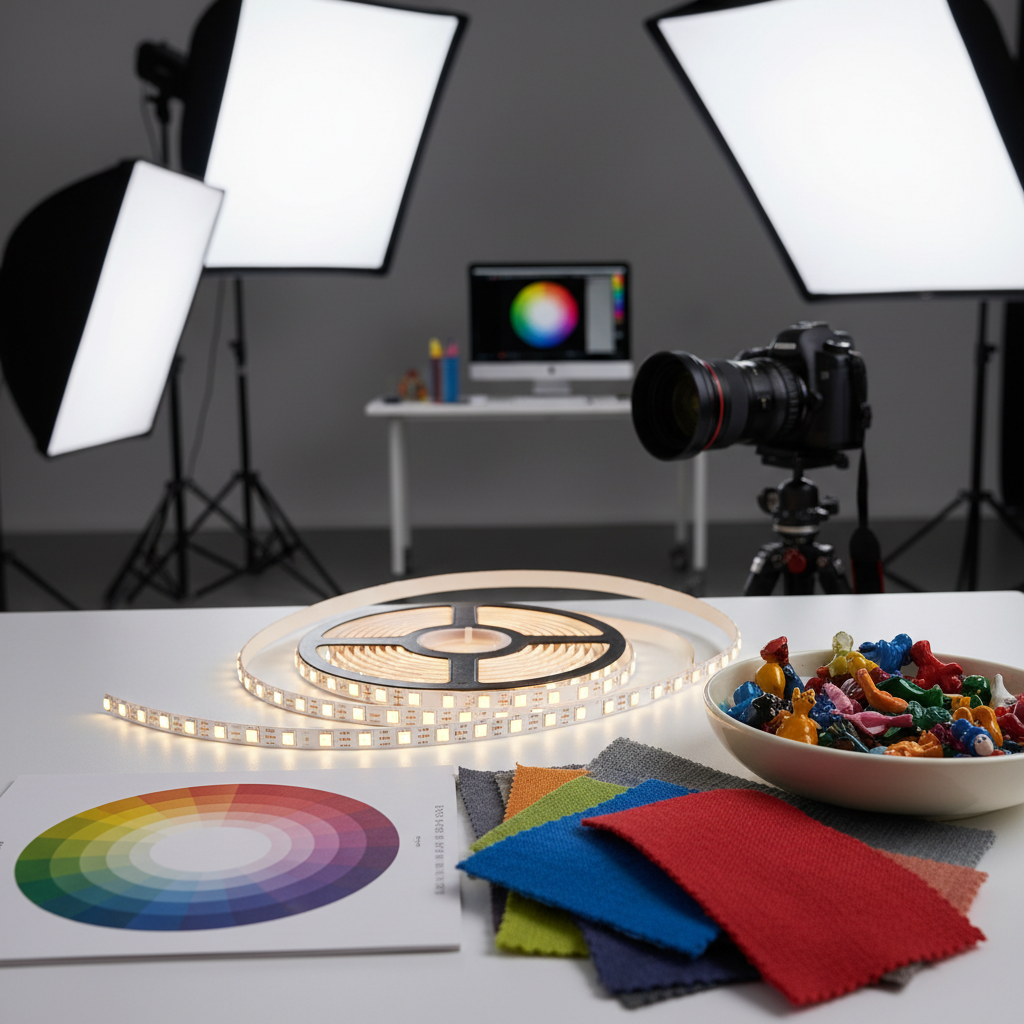
The Unrivaled Advantage of CRI 95+ LED Strip Lights for Photography
At its core, CRI measures how faithfully a light source reveals the true colors of an object compared to natural sunlight. While a standard LED might boast a CRI of 80, this can introduce subtle color shifts, making reds appear duller or skin tones less natural. For photography, where capturing precise color is non-negotiable, a CRI of 95 or above is crucial. It ensures that your subjects, products, and sets are depicted in their exact intended colors, reducing post-production correction time and enhancing the authenticity of your visuals. This superior color rendering means clients see their products as they truly are, and portraits glow with lifelike warmth.
Beyond the general CRI score, discerning photographers also pay close attention to the R9 value. This specific measurement within the CRI scale indicates how accurately a light source renders deep red colors. A high R9 value (ideally 90+) is especially vital for portrait photography, as it ensures healthy, vibrant skin tones, preventing subjects from appearing pale or washed out. Furthermore, understanding Color Correlated Temperature (CCT) is essential, as it dictates the warmth or coolness of the light. Photography studios often utilize a range from 2700K (warm incandescent) to 6500K (cool daylight) to match specific creative visions or simulate different environments.
Anatomy and Applications: A Deep Dive into LED Strip Lights
LED strip lights, often referred to as LED tape or ribbon lights, are flexible circuit boards populated with surface-mounted device (SMD) LEDs. These versatile lighting solutions typically feature an adhesive backing for easy installation and can be cut at designated points to fit custom lengths. Their fundamental structure, consisting of individual LED chips soldered onto a flexible printed circuit board (PCB), allows for immense adaptability. This design, coupled with advancements in LED technology, has paved the way for strip lights with exceptionally high CRI.
The evolution of LED strip lights has brought forth various types, including single-color strips (e.g., pure white, warm white), tunable white (CCT adjustable) strips that allow for dynamic color temperature changes, and RGBW/RGBWW strips that combine full-color capabilities with dedicated white LEDs for improved white light quality. For photography studios, the appeal of LED strip lights lies in their unparalleled flexibility and customizability. They can be seamlessly integrated into tight spaces, curved around objects, or diffused behind panels to create continuous, even lighting. This makes them ideal for a multitude of studio applications, from subtle accent lighting and vibrant background washes to innovative fill light solutions and even DIY softboxes, providing photographers with precise control over their lighting environment.
Superior Benefits of High CRI LED Strip Lights
High CRI LED strip lights offer a compelling suite of advantages that make them a preferred choice for modern photography studios:
- Energy Efficiency: Compared to traditional studio lighting like halogen or fluorescent lamps, LED strip lights consume significantly less power while delivering comparable or superior light output. This translates to lower electricity bills and a reduced environmental footprint, making them a smart long-term investment.
- Exceptional Longevity: Quality LED strip lights boast an impressive lifespan, often exceeding 50,000 hours of operation. This extended durability minimizes the need for frequent bulb replacements and maintenance, ensuring consistent performance over many years. Proper heat dissipation through aluminum profiles can further prolong their operational life.
- Flexibility and Ease of Installation: Their flexible design and adhesive backing allow for effortless installation in virtually any configuration. They can be trimmed to precise lengths, bent around corners, and mounted on various surfaces, offering unparalleled creative freedom in studio lighting design. Installation typically involves simply cleaning the surface, peeling the adhesive, and pressing the strip into place.
- Dynamic Lighting Control: Many high CRI LED strips offer advanced dimming capabilities, allowing photographers to precisely adjust light intensity without sacrificing color accuracy or introducing flicker. This flicker-free operation is absolutely critical for videography and high-speed photography, preventing unwanted banding or strobing effects. They can also be paired with smart controllers for seamless adjustment of brightness and color temperature.
- Enhanced Safety: Unlike older lighting technologies that can generate considerable heat, LEDs operate at much cooler temperatures, reducing the risk of burns or fire hazards in the studio. Furthermore, they do not contain harmful substances like mercury, making them a safer and more environmentally friendly lighting solution.
Navigating the Market: Choosing the Right CRI 95+ LED Strip Lights
Selecting the ideal CRI 95+ LED strip lights for your photography studio involves a careful evaluation of several key factors to ensure they meet your specific creative and technical demands.
Key Considerations:
- CRI and R9 Values: Always verify these specifications. Look for a CRI of 95 or higher, and an R9 value ideally above 90, especially if accurate rendering of red tones and skin colors is important for your work. Be cautious of vague “high CRI” claims without specific numbers, as some cheaper products may falsely advertise their ratings.
- Color Temperature (CCT): Determine the CCT range that best suits your photographic style. Common choices include 5000K-6500K for simulating daylight, or 2700K-3200K for warmer, more inviting tones. Tunable white strips offer the ultimate versatility to switch between these as needed.
- Brightness (Lumens): Assess the required lumen output for your studio space. While strip lights offer flexibility, ensure they provide sufficient brightness for your intended use, whether it’s accent lighting or primary illumination. Higher lumen output often requires more robust power supplies and effective heat dissipation.
- Power & Voltage (12V/24V): LED strips typically operate on either 12V or 24V DC. 24V systems generally allow for longer continuous runs without significant voltage drop, leading to more consistent brightness along the strip. Consider the total length of strips needed and choose the appropriate voltage.
- Density of LEDs: Higher LED density (e.g., 60 LEDs/meter vs. 120 LEDs/meter or even COB strips) translates to a smoother, more uniform light output with less visible spotting, which is highly desirable for photography.
- Flicker-Free Performance: This is paramount for photography, and especially videography. Ensure the LED strips and their compatible drivers/dimmers are designed for flicker-free operation to avoid banding in your footage or still images captured at high shutter speeds.
- Durability and Heat Management: Quality LED strips utilize thicker PCBs (Printed Circuit Boards) for better heat dissipation. For high-output strips, mounting them in aluminum channels is highly recommended. These channels act as heat sinks, protecting the LEDs and extending their lifespan.
- Dimming and Control Compatibility: Check that the strips are compatible with reliable dimmers and control systems, allowing for smooth, precise adjustments to brightness and CCT without buzzing or flickering.
|
Our Picks for the Best LED strip light in 2026
As an Amazon Associate I earn from qualifying purchases.
|
||
| Num | Product | Action |
|---|---|---|
| 1 | KSIPZE 100ft Led Strip Lights RGB Music Sync Color Changing Led Lights with Smart App Control Remote Led Lights for Bedroom Room Lighting Flexible Home Décor |

|
| 2 | Govee White LED Strip Lights, Upgraded 16.4ft Dimmable LED Light Strip 6500K Bright Daylight White, Strong Adhesive, 300 LEDs Flexible Tape Lights for Mirror, Kitchen Cabinet, Bedroom, Christmas Decor |
|
| 3 | NBBUFF Led Lights for Bedroom 50ft (1 Roll), Color Changing RGB Led Strip Lights with 60 Keys Remote and App Control, Music Sync Led Lights for Room Kitchen Party Home Decor |
|
| 4 | dalattin White LED Strip Lights, 20ft Dimmable Super Bright 24V Led Tape Light 6500K 360 LEDs Lights for Bedrooms, Mirror, Kitchen, Home Decoration Daylight White |
|
| 5 | Govee RGBIC LED Strip Lights, Smart LED Lights for Bedroom, Bluetooth LED Lights APP Control, DIY Multiple Colors on One Line, Color Changing LED Strip Lighting Music Sync, Home Decor, 16.4ft |
|
| 6 | Govee 100ft RGBIC LED Strip Lights, Smart LED Lights Work with Alexa and Google Assistant, LED Lights for Bedroom WiFi App Control Segmented DIY Multiple Colors, Color Changing Light, (2 x 50ft) |
|
| 7 | Barrina (6 Pack LED T5 Integrated Single Fixture, 4FT, 2200lm, 6500K Super Bright White, 20W Utility LED Shop Light, Ceiling and Under Cabinet Light, Corded Electric with ON/Off Switch, ETL Listed |
|
| 8 | DAYBETTER LED Strip Lights 110ft, Smart Lighting Strips with App Remote Control, RGB Music Sync Color Changing Lights for Bedroom Kitchen Party Home Decor Luces led para cuarto (1 Roll) |
|
| 9 | White Led Strip Lights for Bedroom Small Dimmable LED Lights Strip 16.4ft Super Bright Flexible LED Tape Lights Rope Light for for Room Home Decor Luces Leds for Living Room Kitchen Vanity Mirror |
|
| 10 | DAYBETTER Led Strip Lights 32.8ft Kit with Remote and Power Supply Color Changing |
|
Comparison Table: Popular LED Strip Light Types for Studios
| Type | Voltage | Color Output | Power (W/m) | Brightness (lm/m) | Key Features for Studio | Price Range (Indicative) |
|---|---|---|---|---|---|---|
| High CRI Single White | 12V/24V | Specific CCT (e.g., 5000K) | 4.8W – 14.4W | 300 – 1500+ | Excellent CRI & R9 for fixed CCT; cost-effective | Moderate |
| High CRI Tunable White | 12V/24V | 2700K-6500K (adjustable) | 9.6W – 19.2W | 600 – 2000+ | Adjust CCT to match scenes; two dedicated white channels | Higher |
| High CRI RGBW/RGBWW | 12V/24V | Full RGB + dedicated white | 14.4W – 24W | 700 – 2500+ | Creative color effects plus high CRI white light | Highest |
Note: Power, brightness, and price are indicative and vary significantly by manufacturer, LED density, and specific product series.
Leading Brands in High CRI LED Strip Lighting for Studios
When investing in high CRI LED strips for professional photography, choosing reputable brands known for their quality and consistent performance is essential.
- Waveform Lighting: A prominent name in high CRI lighting, Waveform Lighting offers “Ultra High CRI LED Strip Lights” with a minimum CRI of 95, often exceeding 90 for R9 values. They provide a range of color temperatures from 2700K to 6500K, including specialized “FilmGrade™ White” options at 3200K and 6500K, and their “ABSOLUTE™ Strip” can even reach 99 CRI with D50 5000K/D65 6500K, making them suitable for the most demanding color-critical applications. Their focus on tight diode patterns ensures smooth illumination.
- Yuji Lighting: Renowned for their high CRI and R9 LED components, Yuji Lighting’s “CRI-MAX” LED strips typically achieve 95-98 CRI with “near perfect DUV,” ensuring minimal tint shift and exceptional color accuracy. They offer various CCTs, including D56 (5600K) and D65 (6500K), which are popular for daylight balancing in studios. Users have reported satisfaction with Yuji strips for their excellent color rendering and adequate brightness for creative projects, noting that higher lumen options benefit from proper heat management.
- Other Notable Mentions: While not primarily manufacturers of finished LED strips, Bridgelux Thrive 98 and Seoul Sunlike are chip manufacturers whose high CRI LED components are integrated into quality strip products by various brands. When researching, looking for products that utilize these advanced LED chips can be a good indicator of superior color rendering.
It is vital to exercise caution when considering generic or unbranded LED strips, especially those making unverifiable “95 CRI” claims. As observed in some reviews, advertised spectrums and CRI ratings from less reputable sources may not align with actual performance, potentially leading to disappointing results and inaccurate color rendition in your photography. Always seek products with detailed specifications and positive reviews from verified users or professional testers.
Expert Installation and Maintenance Tips for Studio Use
Proper installation and ongoing maintenance are crucial for maximizing the performance and longevity of your high CRI LED strip lights in a photography studio environment.
- Plan Your Layout Carefully: Before cutting or mounting, map out your desired lighting scheme. Consider the angles, distances, and diffusion needed to achieve even illumination and avoid harsh shadows or hot spots on your subjects. Strips are excellent for creating continuous light lines.
- Utilize Aluminum Channels: For professional results and optimal performance, always mount your LED strips inside aluminum channels. These channels serve a dual purpose: they act as efficient heat sinks, dissipating heat away from the LEDs to extend their lifespan, and they can accommodate diffusers (frosted or opaque covers) to soften and spread the light, eliminating individual LED dots.
- Ensure Proper Wiring and Power Supply: Use an adequately sized power supply (driver) that matches the voltage of your strips (12V or 24V) and provides sufficient wattage for the total length of strips connected, with a 10-20% buffer. Plan your wiring to minimize voltage drop over long runs, especially with 12V systems, to ensure uniform brightness.
- Integrate with Reliable Controllers: Invest in high-quality dimmers and CCT controllers that are compatible with your LED strips. These allow for precise adjustments to brightness and color temperature, enabling dynamic lighting effects and fine-tuning without introducing flicker or color shifts. DMX or DALI systems offer advanced control for complex studio setups.
- Prioritize Electrical Safety: Always follow manufacturer guidelines and local electrical codes during installation. Ensure all connections are secure and properly insulated to prevent electrical hazards. If you’re unsure, consult a qualified electrician.
- Regular Cleaning: Dust and debris can accumulate on LED strips and diffusers, reducing light output and altering color quality. Gently clean the surfaces with a soft, dry cloth periodically to maintain optimal performance.
- Monitor for Overheating: While LEDs run cooler than traditional lights, high-density or high-power strips can still generate significant heat, especially if enclosed without proper ventilation. Regularly check the temperature of your strips and ensure adequate airflow, particularly if they are not housed in aluminum profiles.
“For professional photographers, investing in high CRI LED strips is not just about brightness; it’s about safeguarding color integrity. A high R9 value is often overlooked, but it’s the secret ingredient for truly vibrant and lifelike skin tones that elevate portraits above the rest.” – Dr. Elena Petrova, Lighting Scientist and Photography Consultant
Conclusion
The quest for perfect lighting in a photography studio is an ongoing journey, but high CRI 95+ LED strip lights represent a significant leap forward in achieving unparalleled color accuracy and creative control. By understanding the critical roles of CRI, R9, and CCT, and by carefully considering factors like brightness, voltage, and brand reputation, photographers can make informed decisions that profoundly impact the quality of their work. Investing in these superior lighting solutions is an investment in the fidelity of your art, ensuring that every image captures the world as it truly appears, with vibrant colors and natural tones.
Are you ready to transform your studio and unlock the full color potential of your photography with CRI 95+ LED strip lights?
Frequently Asked Questions
What does CRI 95+ mean for my photography?
CRI 95+ indicates that the light source renders colors with exceptional accuracy, very close to natural daylight. For photography, this means true-to-life colors in your images, reducing the need for extensive color correction in post-processing and ensuring subjects appear exactly as they do in person, with accurate skin tones and vibrant hues.
Can LED strip lights be used as a primary light source in a studio?
Yes, high-power, high-density CRI 95+ LED strip lights, especially when diffused and arranged strategically, can serve as excellent primary or key light sources in a photography studio. They offer continuous, soft light, and their flexibility allows for creative setups that traditional fixtures might not achieve.
Why is R9 value important in photography studio lighting?
The R9 value specifically measures a light source’s ability to render saturated red colors accurately. For photography, particularly portraits and product photography involving red items, a high R9 score (typically 90+) is crucial to prevent reds from appearing dull or brown, ensuring vivid and natural skin tones.
Are all “high CRI” LED strips genuinely flicker-free?
No, not all LED strips advertised as “high CRI” are necessarily flicker-free. Flicker can be caused by the LED driver or dimmer rather than the LEDs themselves. For videography and high-speed photography, it’s essential to verify that both the LED strips and their compatible power supplies/dimmers are specifically designed and tested for flicker-free operation.
How do I determine the right color temperature (CCT) for my studio?
The ideal CCT depends on your creative goals. 5000K-6500K provides a neutral, daylight-like illumination often preferred for product photography and general studio work. Warmer temperatures (2700K-3200K) can create a cozy, incandescent feel suitable for certain portrait styles. Tunable white strips offer the flexibility to adjust CCT to match various artistic requirements.