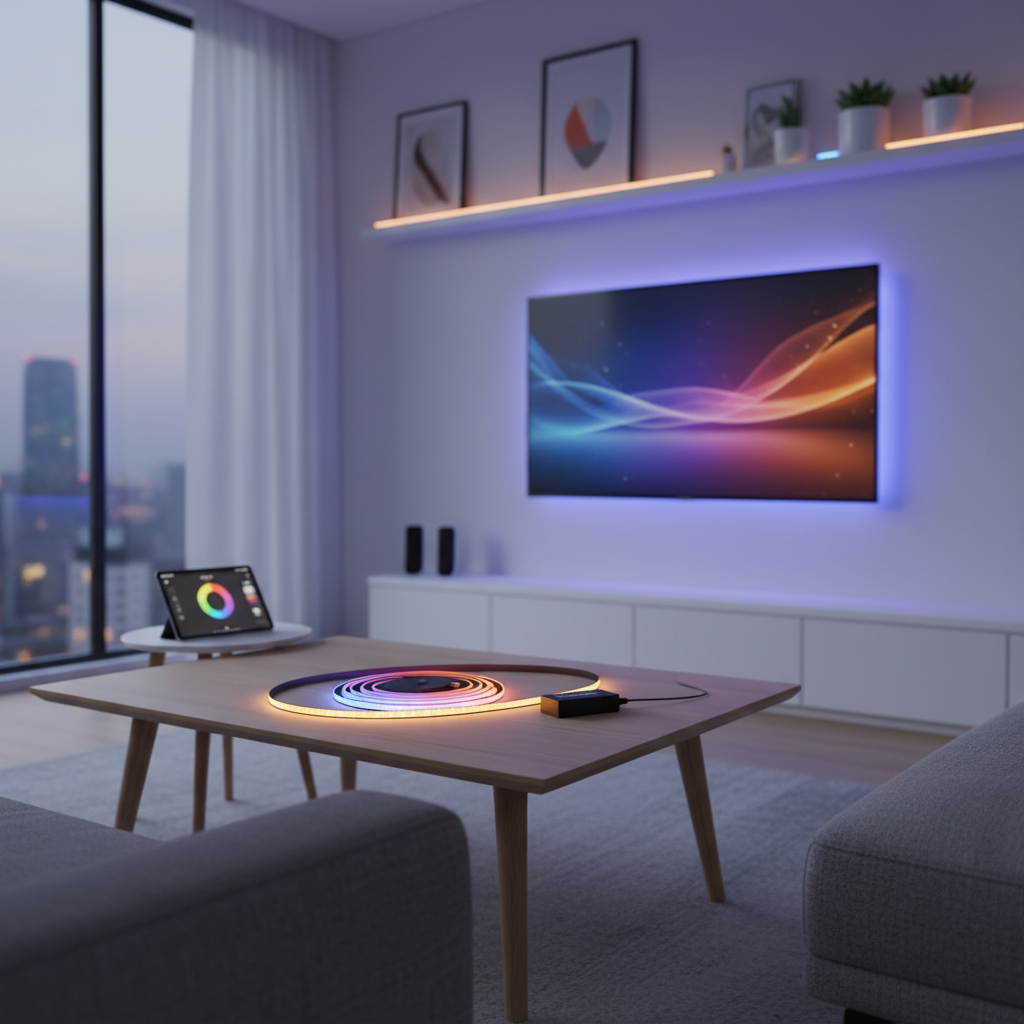
Stepping into the world of addressable LED strip lights can feel like unlocking a universe of vibrant possibilities. These innovative strips allow you to control each individual LED, crafting dynamic lighting effects that transcend traditional illumination. But with options like the popular WS2812B and its advanced counterpart, the SK6812, choosing the right pixel LED strip for your project can be a complex decision. This comprehensive guide will illuminate the key differences, similarities, and critical factors to consider, ensuring you pick the perfect strip to bring your creative visions to life.
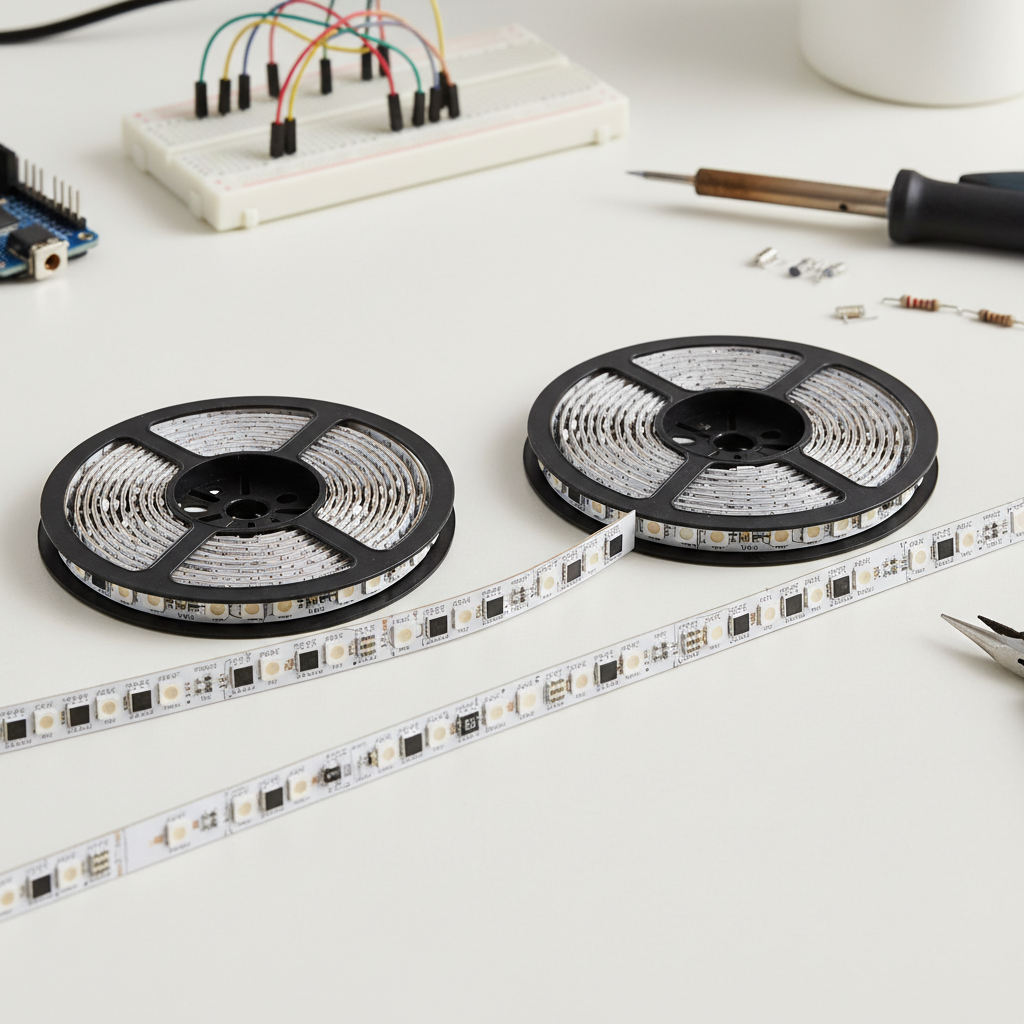
Understanding Addressable LED Strip Lights: WS2812B and SK6812
Addressable LED strip lights are revolutionary because they integrate a tiny control chip (IC) into each LED, enabling independent control over its color and brightness. This allows for breathtaking chase effects, intricate patterns, and personalized lighting zones that static LED strips simply cannot achieve. At their core, both the WS2812B and SK6812 operate on this principle, utilizing a single data line for communication, simplifying wiring and programming.
The WS2812B has long been a staple in the DIY and maker community. It’s an RGB-only chip, meaning it combines red, green, and blue LEDs to create a spectrum of colors. Operating typically at 5V, it’s known for its broad compatibility with popular microcontrollers like Arduino and is often referred to as “NeoPixel” due to widely used libraries. Despite its widespread adoption, its PWM (Pulse Width Modulation) frequency of 400Hz can sometimes result in visible flickering in high-speed animations or camera recordings.
The SK6812 is largely considered an upgraded, improved version of the WS2812B. While also a 5V addressable chip, its most notable advancement is the inclusion of a dedicated white LED channel, offering RGBW (Red, Green, Blue, White) capabilities. This addition allows for the production of purer, more natural white light compared to the mixed white generated by RGB LEDs. Furthermore, the SK6812 boasts a higher PWM frequency of 1200Hz, leading to significantly smoother color transitions and animations, even under demanding conditions.
The Core Differences: WS2812B vs. SK6812
While both chips enable incredible pixel-level control, several crucial differences can sway your decision depending on your project’s specific needs and desired outcomes. Understanding these distinctions is paramount for a successful and satisfying lighting experience.
RGB vs. RGBW: The White Light Advantage
|
Our Picks for the Best LED strip light in 2026
As an Amazon Associate I earn from qualifying purchases.
|
||
| Num | Product | Action |
|---|---|---|
| 1 | Barrina (6 Pack LED T5 Integrated Single Fixture, 4FT, 2200lm, 6500K Super Bright White, 20W Utility LED Shop Light, Ceiling and Under Cabinet Light, Corded Electric with ON/Off Switch, ETL Listed |

|
| 2 | Govee White LED Strip Lights, Upgraded 16.4ft Dimmable LED Light Strip 6500K Bright Daylight White, Strong Adhesive, 300 LEDs Flexible Tape Lights for Mirror, Kitchen Cabinet, Bedroom, Christmas Decor |
|
| 3 | NBBUFF Led Lights for Bedroom 50ft (1 Roll), Color Changing RGB Led Strip Lights with 60 Keys Remote and App Control, Music Sync Led Lights for Room Kitchen Party Home Decor |
|
| 4 | KSIPZE 100ft Led Strip Lights RGB Music Sync Color Changing Led Lights with Smart App Control Remote Led Lights for Bedroom Room Lighting Flexible Home Décor |
|
| 5 | DAYBETTER Led Strip Lights 32.8ft Kit with Remote and Power Supply Color Changing |
|
| 6 | Govee RGBIC LED Strip Lights, Smart LED Lights for Bedroom, Bluetooth LED Lights APP Control, DIY Multiple Colors on One Line, Color Changing LED Strip Lighting Music Sync, Home Decor, 16.4ft |
|
| 7 | Govee 100ft RGBIC LED Strip Lights, Smart LED Lights Work with Alexa and Google Assistant, LED Lights for Bedroom WiFi App Control Segmented DIY Multiple Colors, Color Changing Light, (2 x 50ft) |
|
| 8 | dalattin White LED Strip Lights, 20ft Dimmable Super Bright 24V Led Tape Light 6500K 360 LEDs Lights for Bedrooms, Mirror, Kitchen, Home Decoration Daylight White |
|
| 9 | White Led Strip Lights for Bedroom Small Dimmable LED Lights Strip 16.4ft Super Bright Flexible LED Tape Lights Rope Light for for Room Home Decor Luces Leds for Living Room Kitchen Vanity Mirror |
|
| 10 | DAYBETTER LED Strip Lights 110ft, Smart Lighting Strips with App Remote Control, RGB Music Sync Color Changing Lights for Bedroom Kitchen Party Home Decor Luces led para cuarto (1 Roll) |
|
One of the most significant differentiators is the color support. The WS2812B is an RGB-only LED. To create white light, it mixes the red, green, and blue components. While this can produce a decent white, it often has a slightly bluish or pinkish tint and consumes more power as all three channels are active.
In contrast, the SK6812 offers RGBW variations, which include an additional, dedicated white LED diode. This allows the SK6812 to produce a truly pure, crisp white light without relying on color mixing. This feature is particularly valuable for applications where accurate white light is crucial, such as architectural accent lighting, task lighting, or displays where natural colors are desired. SK6812 also comes in WWA (Warm White, Cool White, Amber) versions for tunable white lighting.
PWM Frequency and Animation Smoothness
PWM frequency dictates how often the LED’s brightness is refreshed. The WS2812B operates at 400Hz, which can be sufficient for many basic lighting effects. However, for complex, fast-paced animations or when viewed through a camera, this lower frequency can sometimes lead to noticeable flickering or “banding” artifacts.
The SK6812 significantly improves upon this with a 1200Hz PWM frequency. This higher refresh rate results in much smoother, fluid animations and eliminates the flickering issues often associated with the WS2812B, making it ideal for video projects, stage lighting, or any application where visual fidelity is paramount.
Voltage Stability and Signal Integrity
Long runs of LED strips are prone to voltage drop, where the voltage diminishes along the strip’s length, leading to inconsistent brightness and color accuracy. The WS2812B is known to be more sensitive to voltage drops, requiring careful power injection at multiple points for extended installations to maintain uniformity.
The SK6812 demonstrates superior voltage stability, maintaining more consistent performance even with slight voltage fluctuations. Its more advanced IC design and wider timing margin make it more forgiving in signal transmission, reducing the risk of flickering or data corruption, especially in longer or less precisely controlled setups. This translates to less complex power management for larger projects.
Brightness Levels
While both chips offer impressive brightness, the SK6812 typically provides a slightly higher luminous output. With brightness levels often reaching 800-1000 mcd compared to the WS2812B’s 500-700 mcd, the SK6812 can be a brighter choice for applications demanding higher intensity illumination. This difference can be crucial in environments with ambient light or when creating impactful visual effects.
Build Quality and Heat Dissipation
The popularity and affordability of the WS2812B have led to a proliferation of low-cost clones, some of which may suffer from inconsistent build quality, potential overheating, and premature failure.
The SK6812, being a more modern and often premium chip, generally benefits from more standardized manufacturing processes, ensuring greater consistency and reliability. It is also engineered with superior heat dissipation characteristics, making it more robust in high-temperature environments or enclosed fixtures.
Cost and Market Availability
The WS2812B remains a more budget-friendly option, largely due to its older design, widespread production, and intense market competition. It is also widely available from numerous suppliers and benefits from extensive community support, with abundant tutorials and libraries (like Adafruit’s NeoPixel library) readily available for hobbyists.
The SK6812, with its enhanced features and performance, comes at a slightly higher price point. While its availability is increasing, the WS2812B still boasts a larger ecosystem of readily available parts and a more established user base for troubleshooting and project ideas.
Technical Specifications Comparison Table
Here’s a quick overview of the key technical differences between the WS2812B and SK6812:
| Feature | WS2812B | SK6812 |
|---|---|---|
| IC Type | WS2812B (integrated) | SK6812 (integrated) |
| Color Support | RGB (Red, Green, Blue) | RGB, RGBW, WWA (Warm White, Cool White, Amber) |
| PWM Frequency | 400Hz | 1200Hz |
| Voltage | DC5V | DC5V |
| Brightness (Typical) | 500-700 mcd | 800-1000 mcd |
| Voltage Drop Resistance | Sensitive, can affect long runs | Optimized, more stable |
| Signal Stability | Finicky with timing, prone to flicker | Wider timing margin, more stable |
| Heat Dissipation | Standard | Superior |
| Cost | Lower, widely available | Slightly higher |
| Community Support | Extensive (Arduino/NeoPixel) | Growing |
| Pixel Control | Individual (single data line) | Individual (single data line) |
| Grayscale Levels | 256 per channel | 256 per channel |
| Color Depth | 8-bit per channel (16.7M colors) | 8-bit per channel (16.7M+ colors with W) |
Choosing the Right Pixel LED Strip for Your Project (Buying Guide)
Selecting between the WS2812B and SK6812 ultimately depends on your project’s specific requirements, budget, and priorities. Consider these factors before making your purchase:
-
Project Purpose and Location:
- Indoor decorative lighting (basic animations, ambient light): WS2812B might be sufficient and more cost-effective.
- Professional installations, architectural lighting, stage effects, photography/videography: SK6812’s higher PWM frequency and stability will be a significant advantage, preventing flickering.
- Applications requiring true white light: SK6812 RGBW is the clear choice for natural, vibrant whites without color shifts.
- Outdoor or high-temperature environments: SK6812’s better heat dissipation can offer greater longevity.
-
Animation Complexity and Speed: If your project involves intricate, fast-changing patterns and animations, the SK6812’s faster refresh rate will deliver a noticeably smoother and more professional result. For simpler, slower effects, the WS2812B is perfectly capable.
-
Length of the Strip: For longer runs (e.g., over 5 meters), the SK6812’s inherent resistance to voltage drop means less concern about power injection points, simplifying wiring and ensuring consistent brightness. With WS2812B, careful planning for power injection becomes essential for longer strips.
-
Budget: If cost is a primary constraint and your project’s demands are relatively basic, the WS2812B offers excellent value. However, for projects where performance, reliability, and specific color rendition (like pure white) are critical, investing in the SK6812 can prevent future headaches and yield a superior outcome.
-
Ease of Use and Community Support: For beginners or hobbyists leveraging Arduino, the WS2812B still boasts a larger, more mature ecosystem of tutorials and code libraries, making it slightly easier to get started. However, SK6812 is also widely supported by most popular LED libraries.
Leading Brands and Quality Considerations
When sourcing addressable LED strips, regardless of whether you choose WS2812B or SK6812, prioritizing quality is paramount for longevity and reliable performance. While direct brand recommendations can change rapidly, here’s what to look for:
- Reputable Manufacturers/Suppliers: Stick to well-known suppliers in the LED industry who specialize in addressable lighting. They are more likely to use genuine ICs and maintain consistent manufacturing standards.
- Quality Certifications: Look for products with relevant certifications (e.g., CE, RoHS) which indicate adherence to certain quality and safety standards.
- User Reviews and Ratings: Always check reviews from other buyers. Real-world feedback can offer valuable insights into a product’s actual performance and reliability. Be wary of excessively low prices, as these often indicate a compromise in component quality, especially with WS2812B clones.
“For professional lighting designers, the SK6812’s RGBW capabilities and enhanced signal stability are game-changers, offering unparalleled control and a truly natural white light that broadens creative possibilities. It’s often worth the slightly higher investment for the peace of mind and superior output.”
Installation and Maintenance Tips for Addressable LED Strips
Proper installation and maintenance are crucial for maximizing the lifespan and performance of your pixel LED strips, whether you choose WS2812B or SK6812.
- Power Supply Sizing: Always use a power supply that can deliver enough current (amperes) for your entire strip. A general rule of thumb is to calculate based on 60mA per LED for RGB and slightly more for RGBW when all channels are at full brightness.
- Power Injection: For runs longer than 1-2 meters, especially with WS2812B, inject power at both ends of the strip and potentially at intermediate points. This mitigates voltage drop and ensures consistent brightness and color.
- Controller Compatibility: Ensure your chosen microcontroller (e.g., Arduino, ESP32) or dedicated LED controller (DMX, ArtNet, Bluetooth/Wi-Fi controllers) is compatible with the WS2812B/SK6812 data protocol. Most libraries like FastLED and Adafruit NeoPixel support both.
- Wiring Safety: Use appropriate wire gauges for power and data lines. Secure all connections properly to prevent shorts or loose contacts. Always disconnect power before making or changing any connections.
- Heat Management: While SK6812 has better heat dissipation, mounting all LED strips on an aluminum profile or heatsink is always recommended. This helps to dissipate heat, preventing overheating and significantly extending the lifespan of the LEDs.
- Environmental Protection: If installing outdoors or in damp environments, ensure your strips have an appropriate IP rating (e.g., IP65, IP67, IP68) and are sealed correctly to prevent moisture ingress.
- Software and Firmware Updates: Keep your controller’s software and firmware up to date to benefit from performance improvements, new features, and bug fixes.
Conclusion
Both the WS2812B and SK6812 offer compelling capabilities for creating dynamic and engaging lighting effects. The WS2812B remains an excellent, affordable choice for hobbyists and projects with basic RGB needs, providing a robust ecosystem of support. However, for those seeking superior performance, professional-grade results, true white light, and enhanced stability over longer runs, the SK6812 stands out as the clear winner. By carefully considering your project’s unique demands against the strengths of each chip, you can confidently select the pixel LED strip that will illuminate your world with precision and brilliance.
What dazzling lighting project will you embark on next with your chosen pixel LED strip?
Câu Hỏi Thường Gặp
What is the main difference between WS2812B and SK6812 LED strips?
The primary difference lies in color support and PWM frequency. SK6812 offers RGBW (Red, Green, Blue, White) with a dedicated white channel for purer whites and a higher 1200Hz PWM frequency for smoother animations. WS2812B is RGB-only, generating white by mixing colors, and has a lower 400Hz PWM frequency, which can lead to visible flicker in some situations.
Can I use the same controller for both WS2812B and SK6812 LED strips?
Yes, in most cases, controllers and libraries (like FastLED and Adafruit NeoPixel) that support WS2812B are also compatible with SK6812. Both chips use a similar single-wire data protocol, allowing for interchangeable control setups. Always verify your specific controller’s documentation for full compatibility.
Which LED strip is better for professional lighting installations?
For professional applications, the SK6812 is generally preferred. Its RGBW capabilities provide superior color accuracy, especially for white light, and its higher PWM frequency ensures smoother, flicker-free performance critical for broadcast or stage lighting. Additionally, its better voltage and signal stability make it more reliable for larger, more complex installations.
Do I need to inject power for SK6812 strips like with WS2812B?
While SK6812 strips are more resistant to voltage drop than WS2812B, power injection is still a good practice for longer runs (typically exceeding 3-5 meters) to ensure optimal and consistent brightness and color accuracy across the entire strip. This minimizes potential issues, especially when all LEDs are at full brightness.
Are SK6812 and WS2812B compatible with each other on the same data line?
While they share a similar data protocol, it’s generally not recommended to mix WS2812B and SK6812 chips on the exact same continuous data line due to subtle timing differences and differing color data structures (RGB vs. RGBW). It’s best to use one type per continuous segment to avoid unexpected behavior or display issues.