Have you ever wondered what those “IP” numbers on your electronics or outdoor gear truly signify? In a world increasingly filled with devices designed for diverse environments, understanding ingress protection (IP) ratings is crucial. While terms like “water-resistant” or “dust-proof” often appear, the IP code provides a clear, universally recognized standard for a device’s resilience against the elements. Among the most common ratings you’ll encounter are IP65 and IP67, often a source of confusion for consumers and professionals alike. This article aims to cut through the jargon, offering a straightforward explanation of these two critical ratings, enabling you to make informed decisions and ensure your investments are adequately protected, whether they face a light drizzle or an accidental dip.
Understanding IP Ratings: The Universal Language of Protection
The Ingress Protection (IP) rating system serves as a global standard for classifying the degree of protection provided by electrical enclosures against the intrusion of solid objects and liquids. Developed by the International Electrotechnical Commission (IEC) under standard 60529, this two-digit code offers far more precision than vague marketing terms. The “IP” stands for Ingress Protection, and the two numbers following it detail the specific levels of defense.
The first digit in an IP rating, ranging from 0 to 6, indicates the level of protection against solid foreign objects, such as dust, dirt, and debris, as well as protection from accidental contact. A rating of ‘0’ means no protection, while ‘6’ signifies a completely dust-tight enclosure, preventing any ingress of solid particles.
The second digit, ranging from 0 to 9, describes the enclosure’s resistance to liquids, almost exclusively water. This scale covers everything from dripping water to powerful jets and even prolonged submersion. A ‘0’ here means no liquid protection, whereas higher numbers denote increasingly robust water resistance. The consistency of this global standard is paramount, ensuring that an IP67 rating, for instance, means the same level of protection whether the product is purchased in Europe, Asia, or the United States. These ratings are not merely claims; they are assigned to devices through rigorous laboratory testing processes conducted by certified and independent companies, providing a reliable measure of a product’s resistance.
IP65 Explained: Protection Against Dust and Water Jets
When you encounter a product rated IP65, it communicates a specific and robust level of environmental protection. The “6” as the first digit immediately tells you that the device offers the highest possible protection against solids. This means it is dust-tight, designed to prevent any ingress of fine dust or dirt particles, making it suitable for even the dustiest environments, like factories or construction sites.
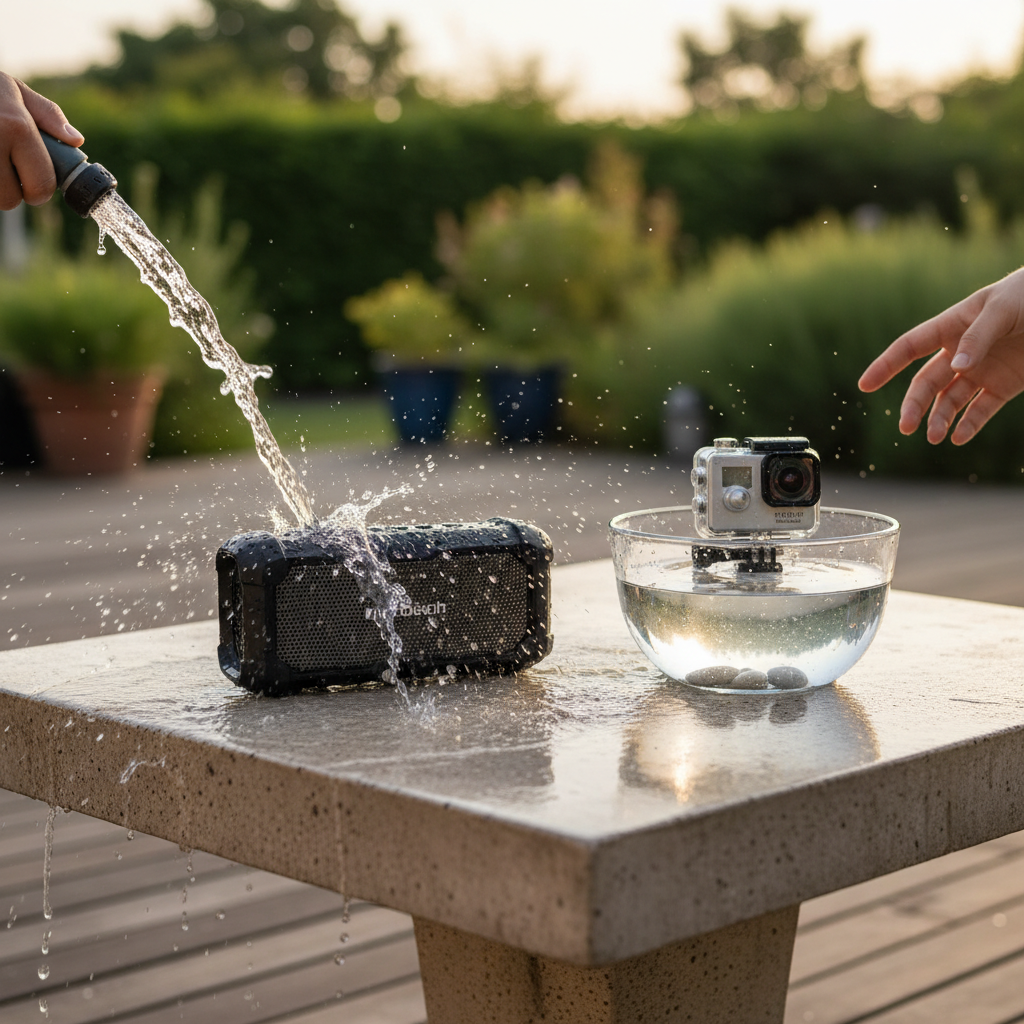
The “5” in IP65 signifies its water resistance capabilities. An IP65-rated enclosure is protected against low-pressure water jets from any direction. Imagine a garden hose spraying water onto the device; an IP65 rating confirms it can withstand such conditions without harmful effects. This level of protection makes IP65 ideal for many outdoor applications where exposure to rain, splashes, or even routine wash-downs with a hose might occur.
Common applications for IP65 devices include:
- Outdoor lighting: Streetlights, patio lights, and garden fixtures that need to endure rain and splashes.
- Surveillance cameras: Outdoor CCTV systems exposed to varying weather conditions.
- Digital signage and display panels: External displays that need to operate reliably in the rain.
- Building automation and telecom equipment: Control panels or network boxes installed outdoors where dust and rain are common, but not submersion.
It is crucial to understand that while IP65 offers excellent protection against water jets and rain, it is not designed for submersion. If a device with an IP65 rating were to be temporarily or continuously immersed in water, it would likely sustain damage. This rating is perfect for situations where moisture comes from above or the sides in the form of sprays or jets, but never from being fully underwater.
IP67 Explained: Protection Against Dust and Temporary Submersion
Stepping up in water protection, an IP67 rating signifies an even greater degree of resilience against liquid ingress. Just like IP65, the “6” in IP67 confirms complete dust-tight protection, ensuring no fine particles can penetrate the enclosure. This makes both IP65 and IP67 equally reliable in preventing dust from compromising internal components.
The key distinction lies in the “7” for liquid protection. An IP67-rated enclosure is designed to withstand temporary immersion in water. Specifically, it can be submerged in water up to 1 meter (approximately 3.2 feet) deep for a duration of up to 30 minutes without harmful ingress of water. This capability makes IP67 suitable for environments where devices might accidentally fall into water, be exposed to heavy rain and standing water, or even be temporarily submerged as part of their operational environment.
Applications that frequently utilize IP67 devices include:
- Smartphones and wearables: Many modern devices are IP67 or IP68 rated to protect against accidental drops in puddles, sinks, or even brief dips in shallow water.
- Marine electronics: Sensors and other equipment used on boats or near water that might experience splashes or temporary submersion.
- Industrial equipment: Devices in wash-down areas, wastewater processing plants, or pump stations where temporary immersion is a risk.
- Outdoor sensors: Environmental monitoring sensors placed near rivers, lakes, or in flood-prone areas.
It’s important to differentiate IP67 from ratings like IP68. While IP67 handles temporary immersion, IP68 is for continuous submersion under conditions specified by the manufacturer, often at greater depths or for longer durations. Therefore, while IP67 offers significant water protection, it’s not intended for activities like prolonged swimming or deep-sea diving unless explicitly stated by the manufacturer with higher depth and time parameters.
IP65 vs. IP67: A Detailed Comparison
Understanding the nuances between IP65 and IP67 is crucial for selecting the appropriate protection for your electronic devices. Both offer exceptional dust protection, but their liquid resistance differs significantly, impacting their suitability for various applications.
Here’s a detailed comparison:
| Feature | IP65 | IP67 |
|---|---|---|
| Dust Protection | Dust-tight (Level 6) | Dust-tight (Level 6) |
| Water Protection | Resists low-pressure water jets from any direction (Level 5) | Withstands temporary immersion up to 1 meter for 30 minutes (Level 7) |
| Environmental Use | Moderate outdoor conditions, heavy rain, splashes, hose wash-downs. Not for submersion. | Harsher conditions, flood-prone areas, accidental drops into water, temporary submersion. |
| Durability | Durable for typical outdoor exposure where water jets are the primary concern. | Enhanced durability, specifically designed to withstand being temporarily submerged in water. |
| Cost | Generally more affordable due to simpler sealing and material requirements. | Often comes at a higher cost due to more robust sealing methods and potentially specialized materials. |
| Typical Applications | Streetlights, outdoor signage, CCTV cameras, outdoor control panels, garden lights. | Smartphones, fitness trackers, marine sensors, industrial equipment in wash-down areas, outdoor equipment near water features. |
Dust Protection: The initial ‘6’ in both ratings confirms that devices are completely dust-tight. This means that regardless of whether you choose an IP65 or IP67 product, it will offer full protection against the ingress of dust, ensuring internal components remain clean and operational even in very dusty environments. This level of solid particle protection is critical for prolonging the lifespan and reliability of sensitive electronics.
Water Protection: This is where the critical difference lies. An IP65 device can handle low-pressure water jets from any direction. Think of a heavy rainstorm, a garden sprinkler, or a light wash-down. The enclosure will prevent water from entering and causing damage. However, it cannot be submerged. In contrast, an IP67 device offers protection against temporary immersion. This means it can survive being fully submerged in water, typically up to 1 meter deep for about half an hour. This capability is vital for scenarios where a device might accidentally fall into a puddle, a shallow stream, or needs to function in an environment prone to temporary flooding.
Environmental Use: The intended environment plays a significant role in your choice. If your device will only face rain, splashes, or occasional direct water spray, IP65 is usually sufficient and cost-effective. For environments with a higher risk of temporary water immersion—such as proximity to ponds, rivers, or areas known for flash floods—IP67 provides the necessary peace of mind.
Durability: While both ratings denote robust devices, IP67 inherently suggests a higher degree of water-related durability. Its enhanced sealing and construction are specifically engineered to prevent water ingress during submersion, making it more resilient in very wet or unpredictable conditions. IP65 devices are tough, but their limits with water are reached before submersion.
Cost: Generally, devices with an IP67 rating will be more expensive than their IP65 counterparts. The advanced sealing technologies and more rigorous testing required for submersion protection contribute to a higher manufacturing cost. Therefore, choosing an IP67 product when IP65 would suffice could lead to unnecessary expenditure.
Typical Applications: The applications are a direct reflection of their protection levels. IP65 is common for permanently installed outdoor fixtures like streetlights or signage, where water jets and rain are the primary threats. IP67 is preferred for portable devices, or equipment in high-risk water environments, where there’s a possibility of the item being temporarily underwater.
“The crucial point when comparing IP65 and IP67 isn’t just about ‘waterproof’ claims, but understanding the specific type of water exposure a device is truly designed to withstand. Ignoring this distinction can lead to premature equipment failure and costly replacements.” – Alex Chen, Lead Engineer, Advanced Enclosure Solutions
Choosing the Right IP Rating: A Practical Guide
Selecting between an IP65 and an IP67 rating doesn’t have to be a complex decision. It boils down to a clear understanding of your device’s intended environment and the specific types of ingress it might face. Making the right choice ensures optimal protection without overspending on unnecessary features.
Assess Your Environment
Start by evaluating where your device will be used. Ask yourself:
- Will it only be exposed to rain, splashes, or accidental spills? If the answer is yes, and there’s no chance of it being fully submerged, an IP65 rating is likely adequate. Think of outdoor security cameras under an eaves, or a garden light in an area that only sees rainfall.
- Is there a possibility of temporary submersion? This could mean accidental drops into a puddle, being left in a flooded area during heavy rainfall, or integration into a system near a water feature or even marine environments. If temporary submersion is a realistic scenario, then IP67 is the safer choice. For example, a smartphone often travels with us, increasing its risk of an accidental drop into water.
|
Our Picks for the Best LED strip light in 2026
As an Amazon Associate I earn from qualifying purchases.
|
||
| Num | Product | Action |
|---|---|---|
| 1 | Govee 100ft RGBIC LED Strip Lights, Smart LED Lights Work with Alexa and Google Assistant, LED Lights for Bedroom WiFi App Control Segmented DIY Multiple Colors, Color Changing Light, (2 x 50ft) |

|
| 2 | KSIPZE 100ft Led Strip Lights RGB Music Sync Color Changing Led Lights with Smart App Control Remote Led Lights for Bedroom Room Lighting Flexible Home Décor |
|
| 3 | dalattin White LED Strip Lights, 20ft Dimmable Super Bright 24V Led Tape Light 6500K 360 LEDs Lights for Bedrooms, Mirror, Kitchen, Home Decoration Daylight White |
|
| 4 | Govee White LED Strip Lights, Upgraded 16.4ft Dimmable LED Light Strip 6500K Bright Daylight White, Strong Adhesive, 300 LEDs Flexible Tape Lights for Mirror, Kitchen Cabinet, Bedroom, Christmas Decor |
|
| 5 | Govee RGBIC LED Strip Lights, Smart LED Lights for Bedroom, Bluetooth LED Lights APP Control, DIY Multiple Colors on One Line, Color Changing LED Strip Lighting Music Sync, Home Decor, 16.4ft |
|
| 6 | White Led Strip Lights for Bedroom Small Dimmable LED Lights Strip 16.4ft Super Bright Flexible LED Tape Lights Rope Light for for Room Home Decor Luces Leds for Living Room Kitchen Vanity Mirror |
|
| 7 | DAYBETTER LED Strip Lights 110ft, Smart Lighting Strips with App Remote Control, RGB Music Sync Color Changing Lights for Bedroom Kitchen Party Home Decor Luces led para cuarto (1 Roll) |
|
| 8 | DAYBETTER Led Strip Lights 32.8ft Kit with Remote and Power Supply Color Changing |
|
| 9 | Barrina (6 Pack LED T5 Integrated Single Fixture, 4FT, 2200lm, 6500K Super Bright White, 20W Utility LED Shop Light, Ceiling and Under Cabinet Light, Corded Electric with ON/Off Switch, ETL Listed |
|
| 10 | NBBUFF Led Lights for Bedroom 50ft (1 Roll), Color Changing RGB Led Strip Lights with 60 Keys Remote and App Control, Music Sync Led Lights for Room Kitchen Party Home Decor |
|
Consider the Application
The function of the device also dictates the necessary IP rating:
- Outdoor Lighting & General Use: For most outdoor lighting, permanent installations like wall-mounted fixtures, or electrical boxes that are exposed to direct weather, an IP65 rating typically provides sufficient protection against rain and splashes. It’s a cost-effective solution for preventing dust and water jets from compromising operation.
- Near Water Features or High-Risk Areas: If you’re installing equipment near a swimming pool, a pond, or in an industrial area where high-pressure cleaning or wash-downs are common, IP67 offers the critical defense against temporary submersion. This also applies to marine electronics or sensors that might experience intermittent water immersion.
- Portable Devices & Wearables: For items you carry daily, like smartphones, smartwatches, or portable speakers, IP67